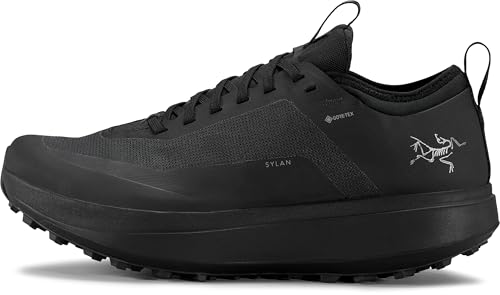

The outsole is the defining feature
Turn a trail shoe over and the difference is immediately visible. Instead of the relatively flat rubber patches common on road shoes, most trail outsoles have lugs: raised shapes that dig into dirt and create braking edges. Shallow lugs work well on gravel, hardpack, and mixed road routes. Deep, widely spaced lugs penetrate mud and release it as the foot lifts.
Lug shape and placement matter as much as depth. Rear-facing edges at the heel help control descents, while forefoot shapes support climbing. Rubber compound changes performance too. Softer, stickier rubber often holds wet rock more confidently, although it can wear faster on asphalt. Harder rubber may last well on dry ground but feel less trustworthy on slick stone.
The best outsole is therefore a terrain choice. A heavily lugged shoe is not automatically superior; it may feel noisy and unstable on pavement or hard rock. A smoother outsole can be excellent on buffed singletrack yet become overwhelmed in clay. Trail shoes work best when their tread resembles the tire you would choose for the route.
The upper balances security, durability, and drainage
A trail-shoe upper has to keep the foot centered while resisting dust, grit, vegetation, and repeated flexing. Reinforced overlays may wrap the midfoot, and a firm heel structure can reduce movement during quick direction changes. The toe is often protected by a bumper that softens accidental contact with roots and rocks.
Those additions do not have to make the shoe rigid. Shoes for hot, dry trails may use open mesh for ventilation, while models for rough ground use denser woven materials that resist tearing. A gusseted tongue—attached along its sides—helps keep debris out and prevents the tongue from sliding. Some collars include a gaiter attachment for sandy, snowy, or particularly loose routes.
Water management creates a tradeoff. A waterproof membrane can keep out shallow splashes and cold rain, but it reduces airflow and cannot stop water entering over the top. Non-waterproof mesh lets water in more easily but usually drains and dries faster. Neither approach is universally correct; temperature, duration, and the likelihood of full immersion should decide.
Protection can come from plates, foam, and shape
Sharp stones concentrate force into a small area under the foot. Trail shoes manage that force with foam density, outsole thickness, and sometimes a rock plate. A rock plate is a thin, firm layer placed within the sole to spread impact. It may cover the full foot or only the forefoot, where sharp pressure is often most noticeable.
A plate is not required for every trail. On smooth dirt, extra stiffness can reduce comfort and make the shoe feel less natural. Thick cushioning can also provide protection without a distinct plate, although very soft foam may compress around a sharp object rather than distributing the force. Minimal shoes take the opposite approach, relying on careful placement and ground feel.
Protection also includes the sides and front of the upper. A toe cap guards against stubs, while raised sidewalls can shield the foot and help hold it on the platform. The right level is personal. Runners who move quickly through rocky terrain may appreciate a protective buffer; runners on gentle paths may prefer flexibility and lower weight.
Stability is built differently from motion control
On a road, the surface is usually predictable. On a trail, one side of the shoe may land higher than the other. Trail stability therefore focuses on controlling uneven contact. A wider base, secure upper, moderate foam firmness, and sidewalls that cradle the foot can all reduce unwanted movement.
This is not identical to traditional road-shoe motion control. A trail shoe can be neutral in its guidance yet feel very stable because it sits low and broad. Conversely, a tall, soft shoe may provide abundant cushioning but require more attention on off-camber ground. Neither layout is inherently unsafe; the right choice depends on terrain, ankle control, and familiarity.
Flexibility contributes to stability as well. A shoe that bends and twists can conform to rocks, while a stiffer platform may bridge over them. Too much of either quality can feel awkward. Hold the shoe at the heel and forefoot and gently twist it, then compare that sensation with your need for ground feel or protection. The test is not a pass or fail—it reveals the shoe's intended character.
Trail fit makes room for descents without allowing drift
Trail running creates forces that a fitting-room stroll may not reveal. Feet move forward on descents and sideways on sloped ground. A good fit locks the heel, wraps the midfoot evenly, and leaves enough front space that the toes do not strike the shoe.
Toe room should not be confused with an oversized fit. Excess length allows the foot to accelerate before hitting the front and can create rubbing elsewhere. Many runners do well with roughly a thumb-width beyond the longest toe, but foot shape, distance, and sock thickness change the requirement. Feet may swell on long outings, so a shoe that is already snug across the toes can become uncomfortable later.
Lacing can refine fit. A runner's loop can reduce heel lift, while skipping an eyelet can relieve pressure over a sensitive area. Lacing cannot repair a fundamentally wrong shape. If the arch feels misplaced, the forefoot bulges over the sole, or the heel swims despite careful tightening, try a different last rather than forcing the shoe to cooperate.
Where trail shoes are useful—and where they are not
Trail shoes are useful on dirt paths, rocky tracks, grass, gravel, forest routes, and any run where traction or underfoot protection improves confidence. Hybrid versions can also handle pavement and make practical walking or travel shoes. Their secure uppers and grippy soles appeal beyond running, but each use still depends on the specific design.
Aggressive mud shoes are poor everyday road shoes because their lugs create uneven contact and wear quickly. Thick, protective mountain shoes may feel unnecessarily heavy on a smooth canal path. Trail rubber is not automatically slip-proof on wet tile, polished indoor floors, or ice. The word “trail” does not override the limits of the outsole.
They are also not a substitute for judgment. Grip helps, but speed, foot placement, weather, and route choice remain important. A shoe cannot make loose rock stable or turn a flooded crossing into a safe one. Think of trail footwear as equipment that widens the comfort zone, not permission to ignore conditions.
How the main trail-shoe families differ
Door-to-trail shoes combine road comfort with light tread. General trail shoes use moderate lugs and balanced protection for varied paths. Soft-ground shoes emphasize deep traction and close foot hold. Mountain shoes add rock protection, durable uppers, and secure platforms. Ultra-distance shoes prioritize lasting comfort and space for swelling. Minimal shoes keep the sole flexible and close to the ground.
Waterproof shoes are another branch rather than a separate terrain category. They can be hybrid, general, or mountain shoes with a membrane added. The same is true of wide, zero-drop, and highly cushioned designs: each changes fit or ride while the outsole still determines the most suitable surface.
Labels are a useful starting point, but inspect the actual shoe. Two models described as general trail shoes can differ dramatically in lug spacing, foam softness, and toe-box shape. Once you can read those elements, the category stops looking like a wall of similar products. Each shoe becomes a set of decisions about grip, control, protection, and comfort.
People also ask
Questions that extend this decision
What does the heel-to-toe drop mean in a trail shoe?
Drop is the difference in sole height between heel and forefoot. A higher drop may feel familiar to heel strikers or runners with limited ankle mobility; a lower drop can shift more work toward the calf and Achilles tendon. It does not determine quality, and changes are best introduced gradually.
Do all trail running shoes have a rock plate?
No. Some rely on thick or dense foam, while flexible shoes intentionally omit a plate to preserve ground feel. Plates are most useful where sharp stones are common. On smooth trails, they may add stiffness without providing a meaningful benefit.
Why do trail shoes sometimes have a pocket on the tongue?
The pocket stores tied lace ends so they do not catch on plants or flap against the foot. It is a small convenience common on shoes intended for brushy or technical routes. Tuck the knot only after confirming the laces are secure and comfortable.
Are waterproof trail shoes completely waterproof?
The membrane can block water through the upper, but the collar remains open. Water can enter from above during deep crossings or heavy rain running down the leg. Membranes also become less effective if damaged, and they generally trade some breathability for weather protection.
Can trail shoes be used for everyday walking?
Yes, especially shoes with moderate lugs and a comfortable fit. Pavement will wear soft rubber and aggressive tread faster, so a specialized mud shoe is inefficient for daily streets. A hybrid or light-trail model is usually quieter, smoother, and more durable for mixed walking.
Final verdict
Choose the tradeoff you understand.
Turn a trail shoe over and the difference is immediately visible. Instead of the relatively flat rubber patches common on road shoes, most trail outsoles have lugs: raised shapes that dig into dirt and create braking edges. Shallow lugs work well on gravel, hardpack, and mixed road routes. Deep, widely spaced lugs penetrate mud and release it as the foot lifts. Fit comes first, the repeated session demand comes second, and the exact current product identity comes third. Use Amazon to verify sizes and options without relying on stale price or stock claims.
As an Amazon Associate, we may earn from qualifying purchases.
Check current options on Amazon