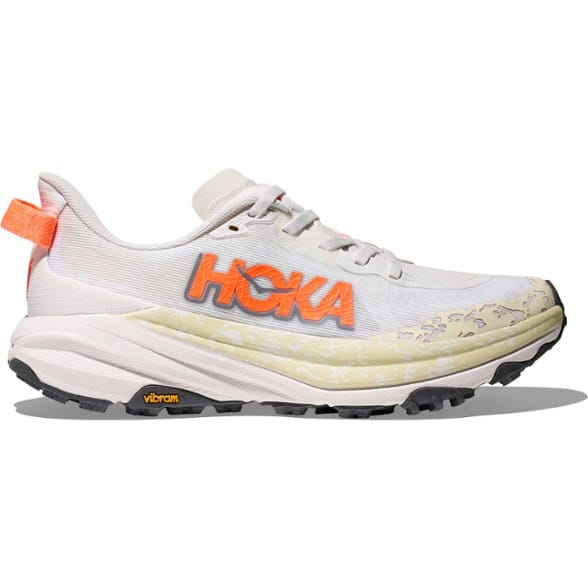

Quick Answer
Choose the Hoka Speedgoat when long-run cushioning, underfoot protection and confidence on rugged trail matter more than a low, traditional feel. Choose the Brooks Cascadia when you want a stable, predictable shoe that can move between moderate singletrack, gravel, hiking and ordinary daily trail miles without feeling highly specialized. The Speedgoat is the more protection-led choice; the Cascadia is the steadier generalist. Fit can overturn that recommendation. Runners sensitive to a tall platform should examine the Cascadia first, while runners who finish long rocky outings wishing for more separation from the ground will probably prefer the Speedgoat.
Two Different Ways to Build Trail Confidence
The Speedgoat and Cascadia overlap on paper because both are protective trail shoes from established running brands, yet they create confidence differently. Hoka uses a generous cushioning platform to soften repeated impacts and keep sharp ground from dominating the ride. It feels designed around staying comfortable as hours and accumulated descent add up. Brooks takes a more measured approach. The Cascadia feels like a dependable trail workhorse, using a stable base and controlled transitions to help the runner stay composed on changing surfaces. Neither philosophy is universally better. A runner who associates confidence with abundant protection may find the Cascadia too ordinary. A runner who associates confidence with a planted, familiar stance may find the Speedgoat more shoe than necessary.
Cushioning, Ground Feel and Fatigue
The Speedgoat places more distance between the foot and trail sensation. That can be welcome on rocky long runs, where repeated small impacts create fatigue even when no single step hurts. Its cushioning is not merely about softness; the broader benefit is reducing how much trail texture the runner must process late in an outing. The compromise is muted feedback. Precise foot placement may rely more on sight and familiarity than direct sensation. The Cascadia preserves more of a conventional trail-shoe conversation with the ground. It still protects, but the ride tends to feel more controlled than enveloping. On moderate distances, that balance can be easier to trust. On very long, harsh courses, runners who value cushioning may wish it offered the Speedgoat's greater isolation.
Stability on Uneven and Off-Camber Trail
A taller cushioned shoe is not automatically unstable, and the Speedgoat uses its platform to create a supportive landing area. On predictable rock gardens and rolling technical trail, many runners appreciate how protection lets them commit instead of tiptoeing. Still, height changes the sensation of an awkward landing. People who dislike leverage under the ankle should test it on slanted surfaces before assuming cushioning equals control. The Cascadia's stability is more immediately legible. Its geometry and firmer, steadier character suit runners who want the shoe to settle quickly after contact. On off-camber hiking trails, broken gravel and tired descents, that predictability is a genuine advantage. It may not feel as luxurious, but it asks less adaptation from runners coming from traditional daily trainers.
Grip Across Rock, Roots, Gravel and Softer Ground
Both model families are intended for real trail use, but outsole condition, current-edition rubber and local geology matter more than a logo. The Speedgoat is most convincing when rugged surfaces and sustained trail exposure justify its protective package. Its outsole layout supports climbing and braking without turning the shoe into a narrow mud specialist. The Cascadia works well as an all-terrain compromise: enough bite for ordinary singletrack, yet not so aggressive that gravel roads and compact paths feel awkward. In deep mud, neither should be selected solely because it won a general trail comparison; a soft-ground specialist may clear muck and bite more effectively. On wet rock, technique and the exact current outsole compound deserve verification. No shoe makes slick stone risk-free.
Fit, Width and Lockdown
The Speedgoat's fit should be judged as a complete system rather than by toe-box reputation alone. Check whether the heel stays centered, whether the midfoot can be secured without pressure, and whether the forefoot has room for late-run swelling. A wide-labelled version may add useful space, but it does not guarantee the right shape for every broad foot. The Cascadia usually appeals to runners who want a familiar running-shoe hold and straightforward lockdown. Its available width choices can make it the easier problem-solver for some feet, though edition changes mean labels should be verified. For either shoe, descend a ramp or incline during try-on. Toes should not strike the front, and tightening the laces should not be the only thing preventing forward slide.
Long Runs, Hiking and Daily Mileage
For long rocky runs and ultramarathon preparation, the Speedgoat has the clearer identity. Its cushioning and protection are most valuable when fatigue accumulates, especially for runners who do not want an intimate ground feel after several hours. It can also work for fast hiking, although hikers carrying weight should confirm lateral security rather than choosing by softness. The Cascadia is easier to recommend as a one-pair trail utility shoe. It can cover steady runs, weekend hiking and mixed training without making every outing feel like an ultra-specific setup. Its less extreme character may also make it simpler to rotate with road shoes. The choice is not distance alone: a smooth long route may favor Cascadia versatility, while a shorter but sharply rocky route can justify the Speedgoat.
Reasons to Choose the Speedgoat
Choose the Speedgoat if protection is the first requirement, your regular trails are rocky or rugged, and you routinely remain on your feet long enough for impact fatigue to influence form. It also makes sense when your current trail shoe feels acceptable early but harsh late. Do not choose it merely because maximal cushioning is popular. Runners who prefer a low connection to the ground, have difficulty controlling taller platforms or mostly run smooth park paths may be paying a handling cost for protection they rarely use. Use the exact Hoka product link only for the Speedgoat: the exact Amazon product card on this page. Check the current edition and widths rather than assuming an older review describes today's upper or fit.
Reasons to Choose the Cascadia
Choose the Cascadia if you want one stable trail shoe for varied terrain and do not need the deepest cushioning sensation. It is particularly logical for runners, walkers or hikers who value predictable transitions and an all-purpose outsole more than a dramatic ride. The Cascadia can also be the safer starting point for someone unsure whether a tall platform will feel natural. Its tradeoff is excitement and isolation: runners seeking a plush long-distance cruiser may find it conservative, and dedicated mud runners may want a more specialized lug pattern. Use the distinct Brooks product link only for the Cascadia: the exact Amazon product card on this page. Do not route this button to the Speedgoat page even when both appear in the same retailer search.
Final Verdict
The Hoka Speedgoat wins for runners who define trail comfort as deep protection from repeated impacts and rough ground. The Brooks Cascadia wins for runners who define confidence as a stable, adaptable platform that behaves predictably across daily runs and hiking. For an ultra on rugged terrain, the Speedgoat is the stronger starting point. For one shoe shared across moderate trail, gravel and weekend walks, the Cascadia is the more natural default. If the decision remains tied, make fit and platform height the final test: choose the shoe that secures the heel without pressure and lets you descend without toe contact or ankle unease. The correct winner is the one whose compromises match your actual weekly terrain, not the one with the louder design identity.
People also ask
Questions that extend this decision
Which is better for rocky descents, Speedgoat or Cascadia?
The Speedgoat is usually the better starting point when rock protection and impact reduction dominate the decision. The Cascadia may suit a runner who values a more planted, conventional feel on uneven landings. Descending technique and fit remain decisive: excessive foot movement inside either shoe cancels much of its platform advantage.
Which model makes more sense for an ultramarathon?
The Speedgoat has the more obvious ultramarathon profile because its cushioning and protection address accumulated fatigue. The Cascadia can still be a sound ultra shoe for runners who already know they prefer a stable, less towering ride, especially on smoother courses. Long training runs should decide, not distance labels alone.
Can both shoes handle road sections?
Both can cross pavement, but neither is primarily a road shoe. The Cascadia's generalist character may feel more natural when road connectors are frequent. The Speedgoat makes more sense when pavement is brief and rugged trail is the main event. Repeated road use can also change outsole wear patterns.
How should wide-footed runners compare them?
Check current width offerings first, then separate total foot width from toe-box shape. A wide label does not guarantee adequate midfoot volume or toe splay. Try both with the socks used on long runs, confirm heel hold, and leave enough front space for swelling without allowing the foot to slide downhill.
Is the Speedgoat unstable because it has more cushioning?
Not automatically. Platform width, foam behavior, foot placement and the runner's ankle control all influence stability. Some runners feel secure because the Speedgoat absorbs trail irregularities; others notice the taller leverage on off-camber ground. A short technical test is more informative than stack height considered in isolation.
Final verdict
Choose the tradeoff you understand.
Choose the Hoka Speedgoat when long-run cushioning, underfoot protection and confidence on rugged trail matter more than a low, traditional feel. Choose the Brooks Cascadia when you want a stable, predictable shoe that can move between moderate singletrack, gravel, hiking and ordinary daily trail miles without feeling highly specialized. The Speedgoat is the more protection-led choice; the Cascadia is the steadier generalist. Fit can overturn that recommendation. Runners sensitive to a tall platform should examine the Cascadia first, while runners who finish long rocky outings wishing for more separation from the ground will probably prefer the Speedgoat. Fit comes first, the repeated session demand comes second, and the exact current product identity comes third. Use Amazon to verify sizes and options without relying on stale price or stock claims.
As an Amazon Associate, we may earn from qualifying purchases.
Check current options on Amazon