

These shoes solve different versions of technical
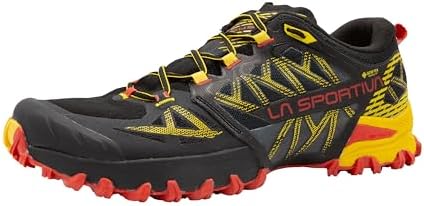
Technical terrain can mean sharp rock and angled ledges, or it can mean steep mud and loose soil. The Bushido III addresses the first definition with a rock guard, side-wrapping outsole, structured platform, and performance fit. The Speedcross 6 addresses the second with an aggressive soft-ground tread and a famously close upper concept.
Putting them in one ranking obscures that split. The correct winner comes from the substrate. On dry mountain rock, Bushido's precision has a clear rationale. On saturated earth, Speedcross' deeper separated lugs become the more relevant tool. A route combining both requires deciding which condition creates the larger consequence.
Underfoot feel
Bushido uses a firm, protected forefoot with a compressed EVA rock guard and TPU stabilization. It keeps surface information available while reducing direct pressure from sharp objects. Its cushioning rating from La Sportiva sits below its stability and protection ratings, reinforcing the controlled purpose.
Speedcross feels more sculpted around soft-ground traction. It is not a max-cushion shoe, yet its underfoot experience is less about rock-plate precision and more about biting through loose surface. On hardpack or pavement, aggressive lugs can feel prominent. Runners seeking plush long-distance comfort should compare neither as the first choice.
Outsole: edge control versus penetration
Bushido III uses 4 mm lugs, mixed rubber zones, and tread wrapping around the midsole. That arrangement supports contact on angled rock and lateral terrain. Speedcross 6 uses a more aggressive lug layout intended to penetrate mud and loose soil, with spacing that helps the outsole release material as the foot lifts.
On wet rock, compound, surface film, and technique still matter; no outsole is guaranteed. On deep mud, Bushido may not clear as efficiently. On firm slabs, Speedcross lugs can reduce the amount of rubber contacting the surface. The comparison is geometric, not merely brand-based.
Fit and width
Bushido III standard is explicitly a performance fit, while the new Wide Fit adds forefoot circumference and height. Salomon's Speedcross has traditionally favored a secure, close shape, though exact current width options should be checked at purchase. Neither should be sized long simply to escape pressure.
For traverses, Bushido must hold the midfoot so the foot stays over its side structure. In mud, Speedcross must prevent sliding as the outsole grips and releases. Test heel lift, instep pressure, and descending toe clearance. A runner needing broad forefoot space should begin with Bushido Wide or a different model with a verified width.
As an Amazon Associate, we may earn from qualifying purchases.
View the mid-guide match on AmazonWeather and drainage
Both families include waterproof versions, but membrane choice is separate from outsole choice. In cold, shallow wetness, GTX can delay water entry. In deep mud, streams, or warm rain where water reaches the collar, breathable versions release heat and moisture more readily.
A deep-lug Speedcross is not automatically waterproof, and a Bushido GTX does not gain mud-specific tread. Read the full suffix. The exact Amazon catalog includes standard Speedcross 6, women's standard Bushido III, and men's Bushido III GTX, allowing weather strategy to remain explicit.
Distance and everyday use
Bushido suits technical training, mountain races, scrambles, and fast hiking where precise placement repeats. Speedcross suits soft-ground runs, fell-style routes, steep dirt, and winter conditions short of hard ice. Each can cover longer outings for a runner who likes the fit, but specialization may become tiring when terrain turns mellow.
For ordinary gravel, a smoother Agravic or Pegasus is more economical. Wearing deep lugs on pavement can feel awkward and add abrasion; carrying a firm technical platform through flat park paths can feel unnecessarily harsh. Specialists deliver value when their challenge occurs often.
Rotation logic
These two can coexist because their roles barely overlap at the extremes. Use Bushido for rock-focused mountain days and Speedcross for wet soft ground. An everyday cushioned trail shoe can handle the broad middle. That three-role scheme is useful only for runners who actually encounter all three conditions; otherwise it becomes expensive clutter.
If purchasing one, inspect the calendar as well as the map. A dry rocky summer may favor Bushido for months, while a wet winter season makes Speedcross more valuable. Replace by role when outsole wear or upper hold changes, not because another specialist exists.
Decisive buying checks
For Bushido, verify III versus II, regular versus Wide, and standard versus GTX. For Salomon, verify Speedcross 6 rather than Peak or another generation, plus standard or waterproof designation. Check sex-specific sizing and retailer returns.
Then look at the route photographs from recent runs. If most images show slab, scree, roots, and angled stone, choose Bushido. If they show churned soil, wet grass, and steep loose banks, choose Speedcross. Evidence from actual terrain is more reliable than a generic “best technical shoe” badge.
People also ask
Questions that extend this decision
Which is better for wet rock?
Bushido's contact-oriented technical outsole is the stronger starting point for rock, but wet grip varies with surface film, wear, and technique. Neither shoe can promise slip-free performance.
Which is better for deep mud?
Speedcross 6 is the clearer choice because its aggressive, spaced lugs are designed around soft ground. Bushido's 4 mm pattern favors precision on firmer technical terrain.
Which shoe has a wider option?
La Sportiva offers a specific Bushido III Wide with added forefoot circumference and height. Verify current Speedcross widths on the exact Salomon listing rather than assuming family-wide availability.
Can either shoe handle road sections?
Short connectors are possible, but both are specialized. Speedcross lugs and Bushido's firm technical platform make extended pavement less natural than a road-to-trail shoe.
Which of these models filters jagged trail impact more effectively?
Bushido III has the clearer sharp-rock case because La Sportiva specifies a forefoot rock guard and substantial protection architecture. Speedcross prioritizes penetration and hold in soft ground.
Final verdict
Choose the tradeoff you understand.
Choose the La Sportiva Bushido III for rocky, off-camber, and technical mountain terrain where platform precision matters. Choose the Salomon Speedcross 6 for soft ground, steep dirt, mud, and runners who like a close foothold with aggressive lugs. Both are specialists; neither is the ideal default for pavement-heavy routes or runners seeking a broad, plush daily trainer. Fit comes first, the repeated session demand comes second, and the exact current product identity comes third. Use Amazon to verify sizes and options without relying on stale price or stock claims.
As an Amazon Associate, we may earn from qualifying purchases.
Check current options on Amazon