
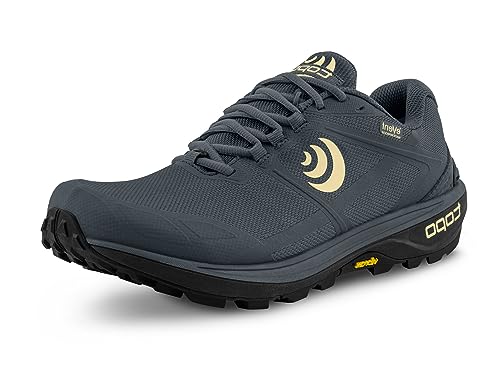
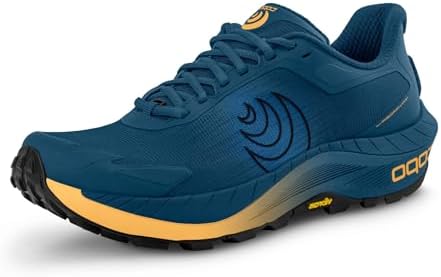

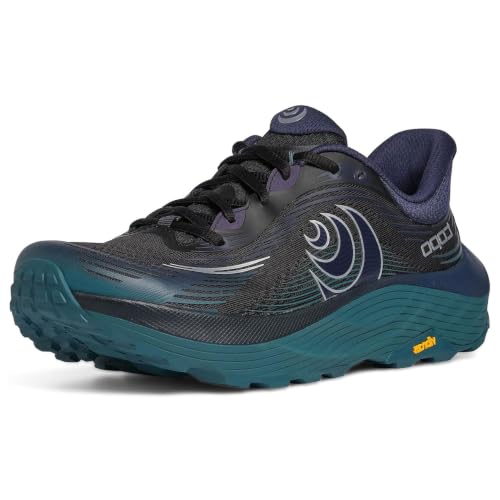

The Topo fit concept
Topo Athletic builds much of its identity around space for the toes without abandoning hold at the back of the foot. That combination targets runners whose forefeet spread during long outings but who dislike a loose heel. It is a shape philosophy, not a promise that every wide foot will fit. Midfoot volume, instep height, and heel geometry still vary by person.
The practical test is movement. Toes should spread without pressing the sidewalls, while the foot remains centered during a diagonal step. If the heel lifts, tightening the entire shoe can create pressure without fixing the mismatch. If the midfoot feels secure but the little toe is crowded, the front shape may still be wrong. An anatomical outline is useful only when it matches the anatomy wearing it.
MTN Racer as the versatile center
MTN Racer is the logical first stop for runners who want a balanced Topo trail shoe. It combines meaningful cushioning with an outsole and platform intended for varied dirt, rock, and daily trail miles. The family can cover training and longer efforts without committing fully to either minimal ground feel or maximum isolation.
Its versatility has limits. Sustained deep mud may require more open, aggressive lugs, and runners who live on pavement may prefer a smoother hybrid. Examine how the shoe flexes at the forefoot and how stable the cushioning feels on an edge. MTN Racer works best as a general trail tool when the runner values toe room, secure fit, and enough protection for routes that change character during the outing.
Ultraventure for long, runnable terrain
Ultraventure directs the formula toward distance comfort. It makes sense on gravel roads, rolling singletrack, and ultra-style routes where the ground is mostly runnable and swelling becomes part of fit. A generous front and sustained cushioning can reduce distractions over many hours, provided the heel and midfoot remain controlled.
The name should not be confused with a license for every surface. Long-distance routes can be muddy, sharply technical, or steep, and outsole demands may exceed a comfort-focused design. Think about the hardest repeated terrain, not just total mileage. For a broad, dry course, Ultraventure's priorities align naturally. For saturated slopes or constant angular rock, compare its traction and platform with more technical alternatives before choosing solely for cushioning.
Terraventure for protection closer to the ground
Terraventure appeals to runners who want underfoot protection and trail capability without a very tall platform. Its lower stance can improve ground awareness and lateral confidence, while a protective layer reduces sharp pressure from stones. The result fits technical day runs and hikers who prefer a stable, flexible-feeling shoe.
Lower cushioning is not automatically faster or safer. It asks the runner to tolerate more feedback and can become tiring when routes are long and hard. Conversely, the closer connection can help with careful placement on broken ground. Compare Terraventure with MTN Racer by asking whether you want to read the trail or soften it. Both goals are valid, and the right answer may change with distance.
As an Amazon Associate, we may earn from qualifying purchases.
View the mid-guide match on AmazonPursuit and the zero-drop decision
Pursuit combines substantial trail cushioning with a zero-drop platform, meaning the heel and forefoot sit at the same relative height. That geometry appeals to runners already comfortable with low-drop footwear who do not want to sacrifice protection or distance capability. It can also attract people curious about a level platform, but curiosity should be paired with patience.
A sudden drop change can increase demand on calves, ankles, and Achilles tendons even when the foam feels soft. Introduce Pursuit through short easy runs and rotate it with familiar shoes. The adaptation question is separate from fit: a shoe can match the foot perfectly while its geometry still changes tissue loading. Treat zero drop as a mechanical characteristic, not a claim of superior form.
Runventure for flexibility and ground feel
Runventure occupies a lighter, lower, more flexible part of the Topo trail spectrum. It suits shorter outings, smooth-to-moderate paths, and runners who enjoy sensing surface changes. Its appeal is control through connection rather than protection through a large stack.
That direct feel makes route selection important. Repeated sharp rocks can fatigue a foot that is not adapted, and a long outing may reveal a desire for more cushioning. Runventure can be an excellent rotation partner for technique-focused easy runs while a more protective shoe handles demanding days. Judge it by the experience it provides, not by the material omitted. A simpler platform still requires secure fit and suitable traction.
Use drop and stack as separate filters
Topo's trail families illustrate why drop and cushioning should not be collapsed into one idea. A shoe can be zero drop and highly cushioned, or have a modest drop while remaining close to the ground. Drop influences relative heel position and tissue loading; stack influences isolation, protection, and leverage above uneven terrain.
Choose the cushioning level for surface and distance. Choose drop with reference to current footwear, mobility, and adaptation history. Then test the two together, because rocker and foam firmness change how numbers feel. A specification chart can narrow the list, but a downhill walk and short jog reveal whether the platform behaves as expected.
Final Verdict
Topo Athletic offers a coherent set of trail choices for runners who appreciate forefoot space and a held rearfoot. MTN Racer covers varied daily use, Ultraventure serves runnable distance, Terraventure favors protected ground feel, Pursuit combines zero drop with cushioning, and Runventure keeps the ride direct.
The brand is not merely “the wide one.” Its more useful story is how fit shape interacts with distinct levels of protection and geometry. Confirm that the heel and midfoot agree with the toe box, choose outsole for the real route, and respect changes in drop. When all three decisions align, Topo's trail lineup can feel both accommodating and controlled.
People also ask
Questions that extend this decision
Do all Topo Athletic trail shoes have a wide fit?
They generally use an anatomical toe area, but overall width and volume are more complex. A roomy front can coexist with a snug heel or moderate midfoot. Try the exact family and use a wide option when available if the standard platform does not match.
Which Topo trail shoe is the most versatile?
MTN Racer is the natural general-purpose starting point because it balances cushioning, protection, and varied-trail use. Versatility depends on local conditions, however. Deep mud, extensive pavement, or highly specialized mountain terrain may point toward a different outsole concept.
How are Ultraventure and Terraventure different?
Ultraventure emphasizes cushioning and comfort for long, runnable terrain. Terraventure sits closer to the ground and adds a more technical, protective character. Choose by whether sustained comfort or precise, lower-profile control matters more on the routes you repeat.
Is Topo Pursuit appropriate for someone new to zero-drop shoes?
It can be used during a careful transition, but its cushioning does not remove the loading change created by zero drop. Begin with short easy runs, alternate with familiar footwear, and increase use gradually. Persistent pain is a reason to pause and reassess.
Can Topo trail shoes accommodate toe swelling during ultras?
The anatomical forefoot can help, especially in distance-oriented families, but correct size and midfoot hold remain essential. Test the shoe late in long training runs. Extra space should surround the toes without letting the whole foot slide forward or sideways.
Final verdict
Choose the tradeoff you understand.
Topo Athletic is best known for an anatomical toe box paired with a heel and midfoot intended to stay secure. MTN Racer is the versatile, cushioned trail option; Ultraventure emphasizes long-distance comfort; Terraventure adds a lower, protective technical feel; Pursuit offers a zero-drop, cushioned trail platform; and Runventure keeps the experience closer to the ground. The roomy front does not mean every foot will fit, so check overall volume and heel shape. Select by terrain first, then by cushioning and drop, introducing a major drop change gradually. Fit comes first, the repeated session demand comes second, and the exact current product identity comes third. Use Amazon to verify sizes and options without relying on stale price or stock claims.
As an Amazon Associate, we may earn from qualifying purchases.
Check current options on Amazon