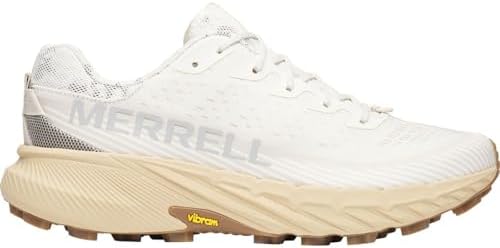


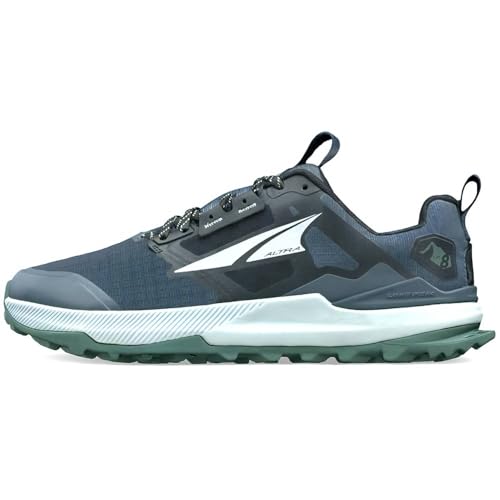
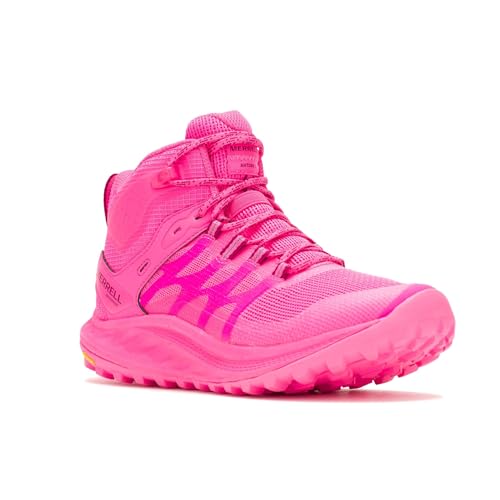

Why Merrell is unusually broad
Merrell's trail range stretches from protective, highly cushioned shoes to pared-back models that preserve ground feel. That breadth makes the brand accessible, but it also means the name alone says little about the ride. An Agility Peak and a Trail Glove can feel as though they came from different design philosophies.
Treat the lineup as a set of lanes. The everyday lane values familiarity and versatility. The MTL lane leans toward performance and more demanding terrain. The cushioned lane places comfort and protection first. The minimalist lane asks the foot and lower leg to do more work. Identifying the lane prevents a common mistake: choosing a shoe because it fits the brand image while overlooking a design that conflicts with the runner's habits.
Agility Peak for cushioned protection
Agility Peak is the family to examine when long outings, rocky surfaces, and underfoot comfort take priority. A substantial platform can reduce the repeated sting of stones and roots, and the shoe's broad trail purpose makes it relevant to runners who want one protective option for varied terrain.
More cushioning changes control as well as comfort. Test whether the platform feels calm when one edge lands higher than the other. A tall shoe that suits one runner can feel disconnected to another. Walk across a sloped surface, descend a ramp, and notice whether the foot stays centered. Agility Peak is most convincing when its cushioning remains guided and predictable, especially late in a run when careful foot placement begins to fade.
MTL Long Sky and Skyfire for a quicker mountain focus
Merrell's MTL label marks its performance-minded trail work. Long Sky families are associated with sustained mountain running and secure technical handling, while Skyfire families push toward lighter, faster efforts. They suit runners who care about precision, race-day movement, and an outsole that participates actively on difficult ground.
The distinction is not simply speed. A performance upper may hold the foot more closely, and firmer or more responsive geometry can feel less relaxed than an everyday trainer. Use race socks during fitting and reproduce downhill pressure before committing. A quick shoe is valuable only if it stays predictable through turns and does not punish the toes. For training dominated by gentle paths, the MTL focus may be more capability than the route requires.
Nova and Antora as everyday trail starting points
Nova and Antora represent approachable daily-trail families, traditionally framed around men's and women's ranges but useful to understand primarily by fit and ride. They are intended for regular dirt paths, mixed park routes, and runners who want recognizable cushioning without a highly specialized mountain personality.
This is where many first-time trail buyers should begin. Moderate tread and a comfortable upper can cover dry singletrack, gravel, and short paved links while revealing whether future needs lean toward deeper grip or more protection. Do not assume an everyday shoe handles every winter condition. If local paths become clay, bog, or steep wet grass, inspect the lug pattern carefully. Versatility works across moderate surfaces; it does not erase the need for a soft-ground outsole.
As an Amazon Associate, we may earn from qualifying purchases.
View the mid-guide match on AmazonTrail Glove and the commitment to minimalism
Trail Glove is built around flexibility, ground feel, and a low-profile experience. It can appeal to runners who have adapted to minimal footwear and hikers who value natural movement. The family should not be treated as a lighter version of an ordinary trainer. Less cushioning and a low-drop geometry shift work toward the feet, calves, and Achilles tendons.
Transition with short, easy sessions, even when the shoe feels comfortable while walking. Adaptation occurs more slowly than enthusiasm. Sharp or long rocky routes may demand careful placement, and fatigued form can expose insufficient preparation. Minimalism is neither a test of toughness nor a universal ideal. Trail Glove is best chosen as a deliberate movement preference supported by gradual loading.
Traction and weather across the range
Merrell uses different outsole strategies because its shoes serve different jobs. Study lug depth, spacing, rubber coverage, and flexibility on the exact family being considered. Moderate lugs suit hardpack and mixed routes; open, stronger shapes make more sense in soft ground. Large exposed areas of foam may save weight but deserve scrutiny on abrasive stone.
Waterproof versions can help in cold rain and wet grass, yet they add warmth and drain slowly if water enters over the collar. Breathable mesh is often better for heat and repeated crossings. Avoid selecting the membrane before selecting the shoe. First find the platform, fit, and tread that suit the route, then decide whether weather protection improves that specific design.
Fit and the difference between width and volume
A broad-looking toe does not guarantee a wide fit throughout the shoe. Some feet need space only near the toes; others need extra midfoot width or room over the instep. Merrell's varied families use different shapes, so a size that works in one line may not transfer perfectly to another.
Fit the longer foot late in the day. Secure the heel, check for even midfoot contact, and leave room ahead of the toes for descents. If an upper wrinkles dramatically when tightened, the volume may be excessive. If laces must be loosened until the foot drifts, it may be insufficient. Available wide options can solve shape problems more cleanly than adding length through a larger size.
Final Verdict
Merrell's advantage is choice across genuinely different trail experiences. Agility Peak provides cushioned protection, MTL families sharpen the performance end, Nova and Antora cover daily trail use, and Trail Glove preserves a distinct minimalist path. That variety rewards a buyer who begins with desired ride rather than choosing by appearance.
For most runners, the decision is a spectrum from ground feel to isolation. Place yourself honestly on it, account for terrain and distance, and test lateral control as carefully as standing comfort. Merrell can supply a suitable tool across much of that spectrum, but the families are not interchangeable. The right one should make its design purpose obvious underfoot.
People also ask
Questions that extend this decision
Is Merrell Agility Peak suitable for long trail runs?
It is designed around cushioning and protection that can suit extended outings. Long-run success still depends on fit, stability, and terrain. Test toe room after swelling and make sure the platform remains controlled on the angled surfaces common to your route.
What does MTL mean in Merrell trail shoes?
MTL identifies Merrell's performance-oriented trail work and appears on families developed for faster or more technical use. The exact design varies by model, so compare Long Sky, Skyfire, and related shoes by terrain, fit, and cushioning rather than treating MTL as one ride.
Are Merrell Trail Gloves good for new runners?
They can be appropriate for someone intentionally learning minimal footwear, but they require a gradual transition. New runners do not automatically need minimal or maximal shoes. Begin with short sessions and allow feet and lower legs to adapt before adding distance or intensity.
How do Nova and Antora differ from Merrell's MTL shoes?
Nova and Antora occupy a more everyday, approachable trail role. MTL families lean toward performance and demanding terrain. The daily options may feel more familiar for routine park trails, while MTL designs become relevant when speed, precision, or mountain conditions dominate.
Should I buy a waterproof Merrell trail shoe?
Choose waterproofing for cold rain, wet vegetation, and shallow moisture where warmth matters. Pick breathable mesh for heat or deep crossings that will send water over the collar. Tread, fit, and platform should suit the route before a membrane enters the decision.
Final verdict
Choose the tradeoff you understand.
Merrell covers a wide span of off-road use. Agility Peak suits runners seeking substantial cushioning and protection, MTL families target faster or more technical efforts, Nova and Antora provide approachable everyday trail options, and Trail Glove serves runners who deliberately prefer minimal cushioning and a low-to-ground feel. The best choice depends on how much shoe you want underfoot. Pick the family that matches terrain and experience, then verify heel hold, forefoot shape, and downhill clearance. Minimal and maximal designs ask different things from the body, so transitions should be gradual. Fit comes first, the repeated session demand comes second, and the exact current product identity comes third. Use Amazon to verify sizes and options without relying on stale price or stock claims.
As an Amazon Associate, we may earn from qualifying purchases.
Check current options on Amazon